Grower, Not Guarantee: What a Slot Studio's Name Really Tells You
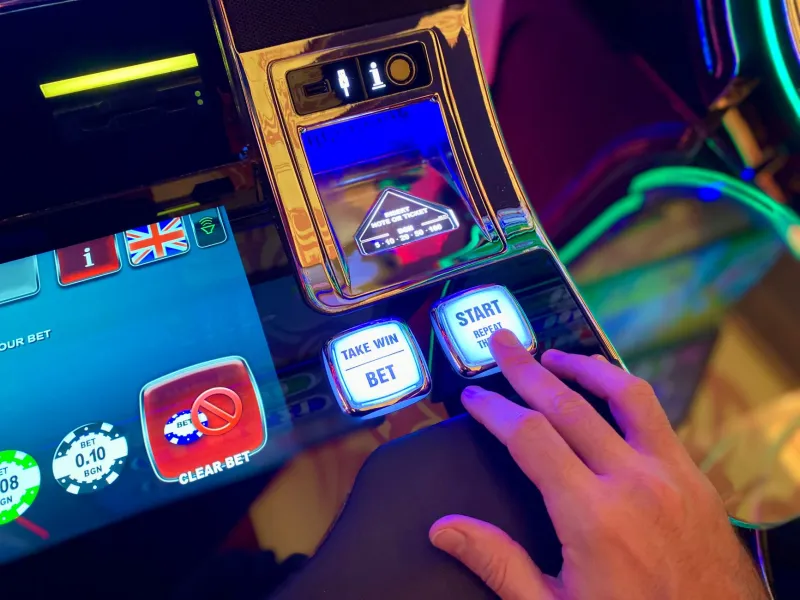
Every fruity slot arrives with a sticker on it. Somewhere in the loading screen, usually bottom-left and slightly too small, there's a logo: Pragmatic Play, NetEnt, Push Gaming, Blueprint, Thunderkick, Hacksaw, a name you half-recognise from a lobby you scrolled past last week. It's the closest thing our hobby has to a farm label on a piece of fruit — and like a farm label, it tells you something real, but not everything you'd like it to.
So let's take the sticker seriously for a moment. What does it actually certify, what does it merely hint at, and where does the useful information stop?
Three names, one game
The first trap is assuming the logo is the whole story. On a UK-facing slot there are often three separate companies involved, and only one of them gets top billing.
- The studio designs the game — the art, the maths model, the feature set. This is the name on the sticker.
- The platform or aggregator distributes it. Many studios don't connect directly to every casino; they ride on a distribution layer, which is why the same title pops up in a dozen lobbies with identical graphics.
- The operator — the casino you're actually playing at — configures the version you get, including the RTP variant where the studio offers a range.
That last point matters more than any logo. Under UK Gambling Commission rules, the return-to-player figure quoted in the game rules has to reflect the version in play, and the maximum win has to be stated plainly. Good. But it means two casinos can run the same fruity slot with different maths under the same studio badge. The sticker hasn't changed; the fruit has.
What the label genuinely tells you
Plenty, as it happens. A studio name is a decent signal for house style, and house style is not nothing.
Think of it like picking a variety of apple. If you know the grower, you know roughly what you're biting into. Some studios are known for dense, cluttered grids and cascading wins. Others lean on classic three-reel fruit machine aesthetics with a modern maths engine underneath. A few build their reputation on brutal volatility and enormous top prizes; others specialise in gentler, more frequent returns. Barcrest's heritage sits in British pub and arcade fruit machines; that lineage is visible in how some of its titles present reels, holds and nudges.
If you've enjoyed three games from one studio, the fourth is a reasonable punt on taste. That's a real, practical use for the label — narrowing a lobby of thousands down to a shortlist of maybe eight.
What it can't tell you
The maths lives on the individual game, not the badge. A studio with a reputation for wild swings will still publish the occasional gentle title, and a studio famous for friendly, low-stakes play will release something with a maximum win that reads like a phone number.
Three specific things the label can't do:
- Predict the RTP you'll get. Check the game rules in the specific casino you're playing at. Don't assume.
- Tell you the volatility. That's a per-game figure, and it's worth reading before you stake anything.
- Guarantee the experience is the one you remember. Studios re-release, reskin and port titles constantly. A familiar fruit basket in 2026 may be a retuned version of something you played years ago, with a different feature frequency and a different hit rate.
A sixty-second check before you spin
Here's a small routine worth building into your session. It takes less time than making a cup of tea.
- Find the studio name in the game info screen, not just the thumbnail. Note whether a second name — a partner studio or a licensed brand — appears alongside it.
- Open the game rules. Scroll to the RTP and the max win. Both should be stated explicitly for the version you're on.
- Look at the volatility indicator if the game provides one, and ask whether it suits the session you've actually got rather than the one you'd like.
- Search the title, not the studio. Reviews and player discussion usually target the specific game. A studio's overall reputation is a starting point, not a verdict.
- Check the release date. A 2019 title wearing a 2026 lobby banner is still a 2019 title. That's fine — just know it.
Familiar fruit, unfamiliar play
This is the bit that catches people out. Fruit themes are cheap to make and endlessly reusable, so the lobby is stuffed with cherries, watermelons, lemons and seven-stacked grids that look like cousins. Under the surface they can be wildly different animals: one might award its bonus feature roughly once every 150 spins, another once every 600. One might cap at 5,000x, another at 50,000x. Neither is better; they just ask different things of your balance and your patience.
That's why a studio logo is a shortcut to style, not to maths. Use it to find games that look and feel the way you like. Then do the boring reading for the numbers.
Where the label stops and you start
The grower can tell you how the fruit was cultivated. It can't tell you how much of it to put in your basket. That part is yours, and it's the part that actually keeps a session enjoyable — a spend limit set before you open the lobby, a win-stop agreed with yourself in advance, a break scheduled rather than improvised.
On Jackfruit Casino we're fond of the sticker. It's genuinely useful. Just don't mistake it for a promise. Read it, weigh it, then read the game itself — and if the numbers don't suit the evening you've planned, there's no shame in leaving that particular fruit on the shelf.
18+. Gambling should be fun and affordable. If it stops being either, take a break — BeGambleAware and GamCare offer free, confidential support, and GAMSTOP can block your access to UK-licensed sites.