The Spiky Tease: How Slot Near-Misses Play With Your Head
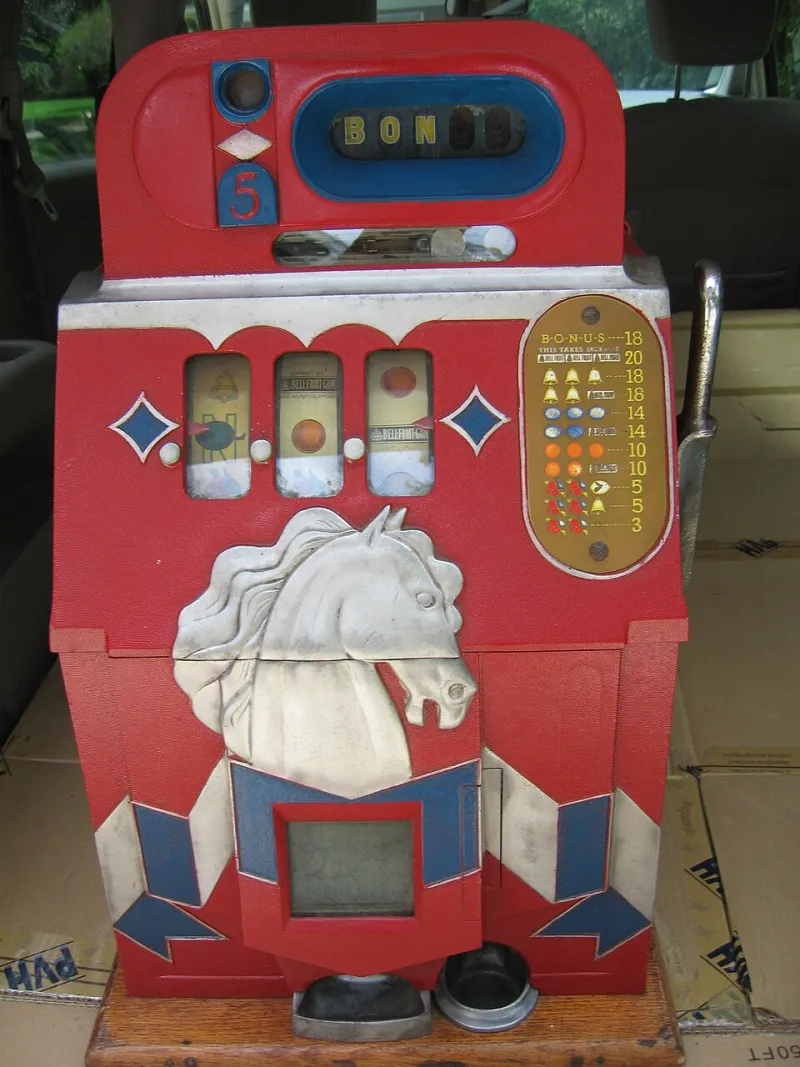
Photo: Gameroom Show, https://www.gameroomshow.com/faq/#Copyright, CC BY-SA 4.0, via Wikimedia Commons
There is a particular noise a slot makes when it wants your attention. The reels slow down. A symbol lands just above the payline. Another stops one space short. The screen holds for a beat longer than it needs to, and your brain quietly files the moment under 'nearly'. It feels like a signal. It is usually theatre.
Near misses are one of the most talked-about bits of slot design, and for good reason. They are memorable, they are visually dramatic, and they can nudge a sensible session into a fidgety one. At Jackfruit Casino we are all for a fruity spin, but we are also keen on clear eyes. So let us pull this apart without the fog.
What a near miss actually is
In simple terms, a near miss is a losing result that looks close to a winning one. Two scatters instead of three. A wild on the fourth reel when the bonus needed it on the fifth. A stack of cherries that stops a millimetre shy of completing a line. The spin did not pay. The picture, however, told a more exciting story.
On modern UK-licensed slots, outcomes are produced by a random number generator. Each spin is independent of the last. The game does not know that you are 'due', and it does not remember that the last bonus teased you twice. What designers can control is presentation: reel speed, anticipation animations, sound cues and the way symbols land. That presentation can make a loss feel like a moment of high tension rather than a simple no.
This is not a secret conspiracy. It is part of the entertainment layer, like a rollercoaster's click-click-click on the way up. The trouble starts when the entertainment layer is mistaken for evidence.
Why 'so close' feels so persuasive
Our brains are pattern-hunting machines. We are good at spotting almost-links, and we are especially good at turning them into stories. 'It was teasing me.' 'It wants to give me the bonus.' 'I just need one more spin to catch it.' None of that is a reading of the maths. It is a reading of the mood.
There is also the sting of the near miss itself. Research on gambling behaviour has long noted that near misses can feel more motivating than clean losses, precisely because they look like progress. A blank screen says 'no'. A screen with two scatters says 'not yet'. For a UK player with a cup of tea going cold beside the keyboard, 'not yet' is a much harder thing to walk away from.
And slot designers are not shy about it. Teaser spins, expanding wilds that stop just short, and bonus symbols that land on the last reel only to reveal a non-paying symbol are all part of the visual grammar. They are allowed. They are also not a forecast.
The three-question reality check
When a spin gives you that 'ooh, nearly' feeling, try this short pause. It takes less time than refreshing the weather app.
One: Did the rules change, or just the picture? If the paytable, the stake and the game's mechanics are exactly as they were a minute ago, then nothing meaningful has changed. A dramatic animation is not a new rule. The bonus is not 'warming up'. The reels are not 'getting hot'. You are watching a designed moment, not a live negotiation.
Two: Am I about to change my stake because of a feeling? This is the big one. If the answer is yes, stop and name the feeling. Is it frustration? Excitement? The urge to chase the almost-win? None of those are reasons to increase a bet. A calm staking plan is set before the session, not in the heat of a teaser spin.
Three: Does this next spin fit my limits? Not just your deposit limit, but your time limit. If you said you would play for twenty minutes, are you still inside that? If you said you would stop at a certain loss, are you still above it? If the honest answer is no, the near miss has already done its job. Close the tab, make a brew, and let the reels cool down.
Calmer staking beats clever reading
There is a temptation, when a slot keeps showing you 'almost', to believe you are solving a puzzle. You are not. You are pressing a button and watching a random outcome being dressed up for the screen. That does not make the game boring. It makes it a game. The fun is in the spin, not in cracking a code that is not there.
A few practical habits help. Set a loss limit and a time limit before you open the game. Use the reality-check reminders that UK-licensed sites offer. Keep your stake steady rather than letting a near miss talk you into a bigger one. And if you feel that familiar itch to 'just see one more', treat it as a signal to pause rather than a signal to spend.
Jackfruit Casino's own patch is safer play, and this is exactly why. A near miss is the spiky outside of the fruit: it looks dramatic, it puts you off balance, and it is not the sweet part. The sweet part is a session you chose, at a stake you set, with a finish time you actually kept.
So enjoy the tease for what it is, a bit of slot theatre. Just do not buy a ticket to the sequel unless it was already in your budget.