Why a Lemon Still Sells a Spin: The Quiet Power of Fruit Symbols in UK Slots
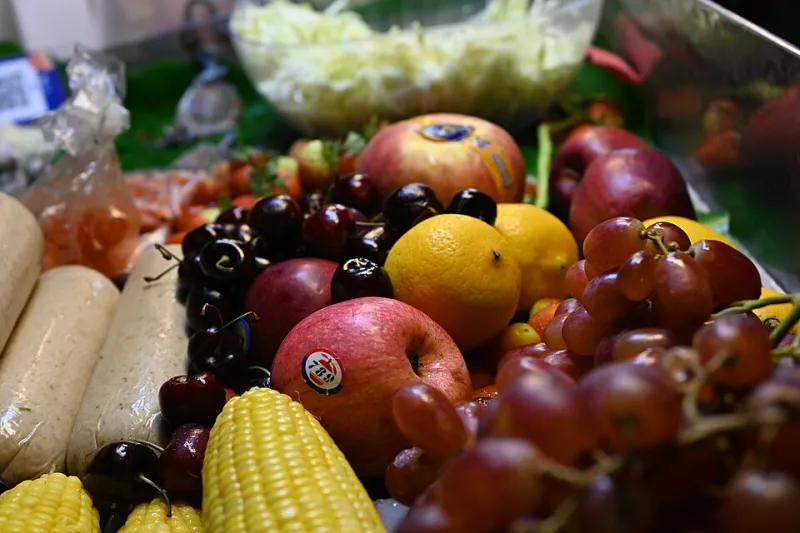
Photo: PattayaPatrol, CC BY-SA 4.0, via Wikimedia Commons
There is a moment in almost every fruit-themed slot where the reels stop and a lemon turns up. Not a glossy, animated lemon with a personality and a catchphrase — just a lemon, flat and bright, sitting there like it has been on the payroll since before your grandparents were born.
It is remarkable that it still works. Slot design has spent two decades chasing cinematic themes, elaborate bonus rounds and enough particle effects to warm a small data centre. And yet a row of cherries can still carry a game on its own.
A very short history of the fruit on the reel
The story usually starts in late nineteenth-century America, where early mechanical machines borrowed card suits and, as the popular account goes, paid out in flavoured chewing gum — cherry, orange, lemon, plum, watermelon. The symbols stayed long after the gum did. When electromechanical fruit machines landed in British pubs, clubs and seaside arcades from the 1960s onwards, the iconography came with them, alongside features that are still faintly visible in modern games: nudges, holds and a gamble ladder dangling the chance to double up.
By the 1980s and 1990s the UK had its own arcade culture, its own manufacturers and its own vocabulary. That legacy is the reason a British player can look at a modern video slot with a strawberry wild and instinctively know what to do. The symbols are not nostalgia for its own sake; they are a shared language.
Why simple reads well on a small screen
Fruit slots work hard in a way that does not look like work. A lemon is readable at thumbnail size, on a phone, while you are on a bus. A cherry is a dot of red that your eye finds instantly. Compare that to a five-character narrative saga rendered in three shades of teal at 40 pixels wide.
There is a design lesson here. Good fruity slots use high contrast, generous symbol size and a shallow colour palette so that the important things — wild, scatter, top payer — stand out from the background. When a game makes you squint to work out whether that is a plum or a grape, something has gone wrong in the art department.
It also keeps the mood light. Fruit does not ask you to care about a plot. It asks you to spin, and that emotional simplicity is a big part of the appeal for players who want a short, unfussy session rather than an unfolding epic.
The remix years
Modern studios have taken the same handful of icons and run them through every filter available. Some examples of the shape-shifting:
- Fruit as wild. A watermelon, a strawberry or a pineapple stepping in for everything else is now close to standard, and it gives a familiar icon a functional promotion.
- Fruit as scatter. Cherries are the classic trigger, often three or more anywhere on the reels rather than on a payline.
- Fruit as cluster. Grid-style games abandon paylines entirely, so symbols pay for touching rather than aligning — a genuinely different rhythm from the old three-reel machines.
- Fruit as multiplier. A lemon with a x3 on it is doing the same job as the old gamble feature, just without the mini-game.
- Fruit as pure style. Some titles keep the aesthetic and add full video-slot machinery underneath: cascades, free spins, expanding symbols and progressive bonuses.
The result is a genre that can be played at wildly different levels of complexity, from a stripped-back three-reeler to a grid game with more going on than a bank holiday market.
What a fruity paytable can teach you
Because the symbols are so familiar, fruit slots are unusually good for learning to read a game properly. The old hierarchy still holds in most of them: plain fruit and card ranks at the bottom, richer or rarer fruit near the top, wild and scatter doing their special jobs. Where a game breaks that pattern, it is usually telling you something about volatility.
A quick checklist worth running before any spin:
- What pays what? Open the paytable, not just the splash screen. Which symbols are genuinely rare, and what does the top one return for five of a kind?
- Where does the value live? If the base game looks thin but the bonus is generous, you are buying a lottery ticket with extra stages. That suits some players and bores others rigid.
- What is the wild doing? A wild that appears only on one reel is a very different animal from one that can land anywhere.
- How does it feel at a low stake? Fruit slots are often forgiving on 10p to 20p spins, which makes them good for a controlled session — see our safer play notes if you want a budgeting framework to go with it.
- Does the theme actually do anything? Some games slap a watermelon on a standard maths model and call it summer. It is not a crime, but it is worth noticing.
The verdict on the lemon
Fruit symbols survive because they are efficient. They are legible, they are warm, and they carry forty years of British arcade memory in a shape you can recognise from across a room. A studio can build almost any maths model underneath them and the iconography will still hold up.
Which is why the lemon keeps turning up. It is not there for originality — it is there because it works, and because a player somewhere is smiling at it. Simple, honest, slightly absurd: not a bad description of the whole genre, really.
Jackfruit Casino publishes slot commentary and safer-play guidance for UK players. No game mentioned here is a recommendation to play, and fruit is not a strategy.